

गोवा खबर
Goa’s per-capita plastic waste burden highlights a structural vulnerability

-
/home/goakhabar/public_html/wp-content/plugins/mvp-social-buttons/mvp-social-buttons.php on line 117
- /home/goakhabar/public_html/wp-content/plugins/mvp-social-buttons/mvp-social-buttons.php on line 120
- /home/goakhabar/public_html/wp-content/plugins/mvp-social-buttons/mvp-social-buttons.php on line 123
- /home/goakhabar/public_html/wp-content/plugins/mvp-social-buttons/mvp-social-buttons.php on line 126
https://www.goakhabar.com/?p=109420&t=
Warning: Undefined variable $post in /home/goakhabar/public_html/wp-content/plugins/mvp-social-buttons/mvp-social-buttons.php on line 117
Warning: Attempt to read property "ID" on null in /home/goakhabar/public_html/wp-content/plugins/mvp-social-buttons/mvp-social-buttons.php on line 117
Goa’s per-capita plastic waste burden highlights a structural vulnerability', 'facebookShare', 'width=626,height=436'); return false;" title="Share on Facebook">
Goa’s per-capita plastic waste burden highlights a structural vulnerability &url=
Warning: Undefined variable $post in /home/goakhabar/public_html/wp-content/plugins/mvp-social-buttons/mvp-social-buttons.php on line 120
Warning: Attempt to read property "ID" on null in /home/goakhabar/public_html/wp-content/plugins/mvp-social-buttons/mvp-social-buttons.php on line 120
https://www.goakhabar.com/?p=109420', 'twitterShare', 'width=626,height=436'); return false;" title="Tweet This Post">
https://www.goakhabar.com/?p=109420&media=
Warning: Undefined variable $post in /home/goakhabar/public_html/wp-content/plugins/mvp-social-buttons/mvp-social-buttons.php on line 123
Warning: Attempt to read property "ID" on null in /home/goakhabar/public_html/wp-content/plugins/mvp-social-buttons/mvp-social-buttons.php on line 123
https://www.goakhabar.com/wp-content/uploads/2026/01/0e8d9503-3c77--533x354.jpg&description=
Warning: Undefined variable $post in /home/goakhabar/public_html/wp-content/plugins/mvp-social-buttons/mvp-social-buttons.php on line 123
Warning: Attempt to read property "ID" on null in /home/goakhabar/public_html/wp-content/plugins/mvp-social-buttons/mvp-social-buttons.php on line 123
Goa’s per-capita plastic waste burden highlights a structural vulnerability', 'pinterestShare', 'width=750,height=350'); return false;" title="Pin This Post">
Goa’s per-capita plastic waste burden highlights a structural vulnerability&BODY=I found this article interesting and thought of sharing it with you. Check it out:
Warning: Undefined variable $post in /home/goakhabar/public_html/wp-content/plugins/mvp-social-buttons/mvp-social-buttons.php on line 126
Warning: Attempt to read property "ID" on null in /home/goakhabar/public_html/wp-content/plugins/mvp-social-buttons/mvp-social-buttons.php on line 126
https://www.goakhabar.com/?p=109420">
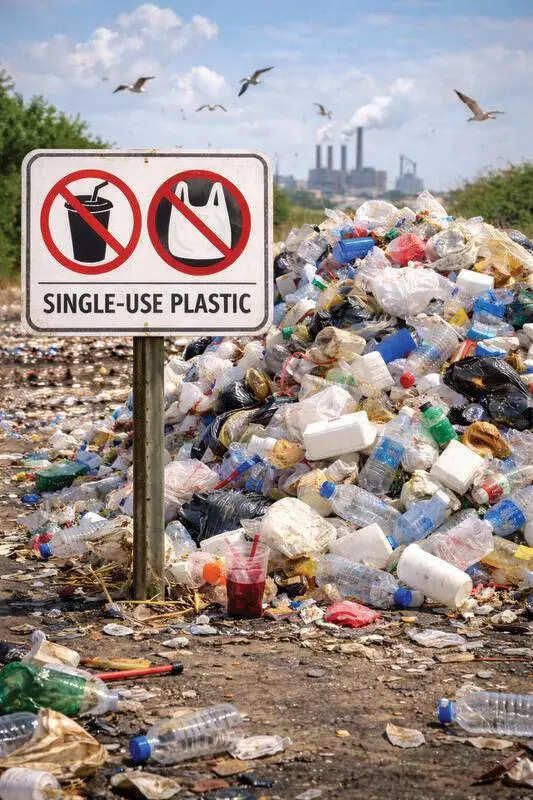
Goa Khabar : Goa’s waste management challenge is often discussed in absolute terms, but per-capita figures reveal a deeper structural vulnerability. Despite its relatively small population, the state generates plastic waste at a rate that places disproportionate pressure on its land, water systems, and public infrastructure.
According to official and published assessments, Goa produces 61.2 grams of plastic waste per person per day, the highest per-capita figure recorded in India. By comparison, the national average stands at approximately 7.6 grams per person per day. On an annual basis, this translates to around 22 kilograms of plastic waste per capita, significantly above the national average of about 15 kilograms.
This imbalance is not simply a function of poor disposal habits. It reflects the nature of consumption in the state. Goa’s economy is heavily oriented toward tourism, hospitality, and short-term visitors, all of which generate high volumes of packaged consumption outside households. Bottled beverages, sachets, and disposable containers dominate public-space waste streams.
In absolute terms, Goa generates more than 26,000 tonnes of plastic waste every year, contributing to a daily municipal solid waste load of close to 800 tonnes, of which 45 per cent is non-biodegradable. Plastic forms a substantial and visible share of this fraction. These figures place Goa in a uniquely exposed position, where even small increases in consumption translate into significant environmental pressure.

Per-capita metrics matter because they determine system stress. States with larger populations can spread waste across wider collection networks and larger processing capacities. Goa’s compact geography, limited landfill space, and sensitive coastal and riverine ecosystems leave little margin for error. Plastic waste that is not captured quickly is more likely to enter drains, rivers, mangroves, and coastal waters.
Scientific studies reinforce this concern. Research conducted in Goa’s mangrove ecosystems has shown that plastic accounts for around 66 per cent of all recorded litter, rising to over 80 per cent at some locations. Crucially, nearly 89 per cent of this plastic was traced to land-based sources, underscoring that leakage originates from everyday consumption rather than offshore activity.
This creates a timing problem. Plastic waste often escapes control at the moment of consumption, long before it can be captured by municipal systems. Clean-up drives and enforcement measures address the aftermath, but they do not prevent repeated leakage in high-footfall areas.
It is in this context that Goa’s Deposit Refund Scheme becomes relevant. A Deposit Refund Scheme (DRS) addresses per-capita plastic pressure not by expanding infrastructure, but by altering behaviour at the point where waste is generated. By attaching a refundable deposit to plastic packaging, the system ensures that each item retains value after use.
International data illustrates the effect of this approach. Deposit systems operating across more than 50 regions globally and countries like Germany and Norway exceed 90 per cent collection rate. Litter studies from these regions show reductions of 40 to 90 per cent for items covered under deposit schemes. The mechanism does not eliminate consumption, but it sharply reduces the likelihood that plastic becomes unmanaged waste.
Goa’s per-capita plastic figures highlight a structural challenge rather than an administrative lapse. Addressing that challenge requires tools that respond to how and where plastic is consumed. Deposit Refund Scheme based recovery does not replace existing waste management systems, but it offers a way to relieve pressure at its source, where per-capita impacts are felt most acutely.
-
/home/goakhabar/public_html/wp-content/plugins/mvp-social-buttons/mvp-social-buttons.php on line 117
- /home/goakhabar/public_html/wp-content/plugins/mvp-social-buttons/mvp-social-buttons.php on line 120
- /home/goakhabar/public_html/wp-content/plugins/mvp-social-buttons/mvp-social-buttons.php on line 123
- /home/goakhabar/public_html/wp-content/plugins/mvp-social-buttons/mvp-social-buttons.php on line 126
https://www.goakhabar.com/?p=109420&t=
Warning: Undefined variable $post in /home/goakhabar/public_html/wp-content/plugins/mvp-social-buttons/mvp-social-buttons.php on line 117
Warning: Attempt to read property "ID" on null in /home/goakhabar/public_html/wp-content/plugins/mvp-social-buttons/mvp-social-buttons.php on line 117
Goa’s per-capita plastic waste burden highlights a structural vulnerability', 'facebookShare', 'width=626,height=436'); return false;" title="Share on Facebook">
Goa’s per-capita plastic waste burden highlights a structural vulnerability &url=
Warning: Undefined variable $post in /home/goakhabar/public_html/wp-content/plugins/mvp-social-buttons/mvp-social-buttons.php on line 120
Warning: Attempt to read property "ID" on null in /home/goakhabar/public_html/wp-content/plugins/mvp-social-buttons/mvp-social-buttons.php on line 120
https://www.goakhabar.com/?p=109420', 'twitterShare', 'width=626,height=436'); return false;" title="Tweet This Post">
https://www.goakhabar.com/?p=109420&media=
Warning: Undefined variable $post in /home/goakhabar/public_html/wp-content/plugins/mvp-social-buttons/mvp-social-buttons.php on line 123
Warning: Attempt to read property "ID" on null in /home/goakhabar/public_html/wp-content/plugins/mvp-social-buttons/mvp-social-buttons.php on line 123
https://www.goakhabar.com/wp-content/uploads/2026/01/0e8d9503-3c77--533x354.jpg&description=
Warning: Undefined variable $post in /home/goakhabar/public_html/wp-content/plugins/mvp-social-buttons/mvp-social-buttons.php on line 123
Warning: Attempt to read property "ID" on null in /home/goakhabar/public_html/wp-content/plugins/mvp-social-buttons/mvp-social-buttons.php on line 123
Goa’s per-capita plastic waste burden highlights a structural vulnerability', 'pinterestShare', 'width=750,height=350'); return false;" title="Pin This Post">
Goa’s per-capita plastic waste burden highlights a structural vulnerability&BODY=I found this article interesting and thought of sharing it with you. Check it out:
Warning: Undefined variable $post in /home/goakhabar/public_html/wp-content/plugins/mvp-social-buttons/mvp-social-buttons.php on line 126
Warning: Attempt to read property "ID" on null in /home/goakhabar/public_html/wp-content/plugins/mvp-social-buttons/mvp-social-buttons.php on line 126
https://www.goakhabar.com/?p=109420">