
इंग्लिश खबर
Goa Institute of Management-Led Research Studies the Impact of Global Political Conflicts and Crude Oil Price Hikes on Global Markets

-
/home/goakhabar/public_html/wp-content/plugins/mvp-social-buttons/mvp-social-buttons.php on line 117
- /home/goakhabar/public_html/wp-content/plugins/mvp-social-buttons/mvp-social-buttons.php on line 120
- /home/goakhabar/public_html/wp-content/plugins/mvp-social-buttons/mvp-social-buttons.php on line 123
- /home/goakhabar/public_html/wp-content/plugins/mvp-social-buttons/mvp-social-buttons.php on line 126
https://www.goakhabar.com/?p=113395&t=
Warning: Undefined variable $post in /home/goakhabar/public_html/wp-content/plugins/mvp-social-buttons/mvp-social-buttons.php on line 117
Warning: Attempt to read property "ID" on null in /home/goakhabar/public_html/wp-content/plugins/mvp-social-buttons/mvp-social-buttons.php on line 117
Goa Institute of Management-Led Research Studies the Impact of Global Political Conflicts and Crude Oil Price Hikes on Global Markets', 'facebookShare', 'width=626,height=436'); return false;" title="Share on Facebook">
Goa Institute of Management-Led Research Studies the Impact of Global Political Conflicts and Crude Oil Price Hikes on Global Markets &url=
Warning: Undefined variable $post in /home/goakhabar/public_html/wp-content/plugins/mvp-social-buttons/mvp-social-buttons.php on line 120
Warning: Attempt to read property "ID" on null in /home/goakhabar/public_html/wp-content/plugins/mvp-social-buttons/mvp-social-buttons.php on line 120
https://www.goakhabar.com/?p=113395', 'twitterShare', 'width=626,height=436'); return false;" title="Tweet This Post">
https://www.goakhabar.com/?p=113395&media=
Warning: Undefined variable $post in /home/goakhabar/public_html/wp-content/plugins/mvp-social-buttons/mvp-social-buttons.php on line 123
Warning: Attempt to read property "ID" on null in /home/goakhabar/public_html/wp-content/plugins/mvp-social-buttons/mvp-social-buttons.php on line 123
https://www.goakhabar.com/wp-content/uploads/2026/06/GIM-Campus-500x354.jpg&description=
Warning: Undefined variable $post in /home/goakhabar/public_html/wp-content/plugins/mvp-social-buttons/mvp-social-buttons.php on line 123
Warning: Attempt to read property "ID" on null in /home/goakhabar/public_html/wp-content/plugins/mvp-social-buttons/mvp-social-buttons.php on line 123
Goa Institute of Management-Led Research Studies the Impact of Global Political Conflicts and Crude Oil Price Hikes on Global Markets', 'pinterestShare', 'width=750,height=350'); return false;" title="Pin This Post">
Goa Institute of Management-Led Research Studies the Impact of Global Political Conflicts and Crude Oil Price Hikes on Global Markets&BODY=I found this article interesting and thought of sharing it with you. Check it out:
Warning: Undefined variable $post in /home/goakhabar/public_html/wp-content/plugins/mvp-social-buttons/mvp-social-buttons.php on line 126
Warning: Attempt to read property "ID" on null in /home/goakhabar/public_html/wp-content/plugins/mvp-social-buttons/mvp-social-buttons.php on line 126
https://www.goakhabar.com/?p=113395">
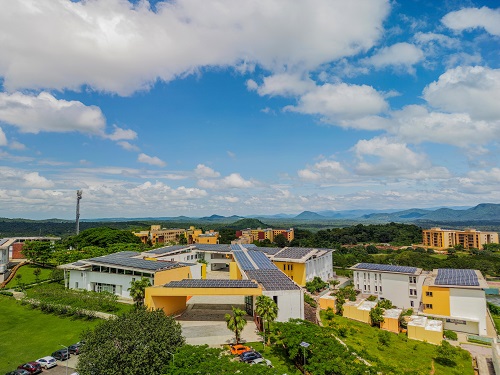
Goa Khabar: In a joint study conducted by researchers from Goa Institute of Management (GIM), Indian Institute of Management Raipur and Xavier School of Management (XLRI) Jamshedpur, the team has examined how geopolitical conflicts and fluctuations in crude oil price influence stock market across the globe.
Published in the prestigious American Business Review journal, the study shows how geopolitical events and energy market disruptions impact stock markets across the world.

The study has been conducted by Prof. Chinmaya Behera, Associate Professor, GIM, along with Prof. Pradiptarathi Panda, Assistant Professor, IIM Raipur, and Prof. Purna Chandra Padhan, Professor, XLRI Jamshedpur. The research team used daily data from 39 advanced economies, for the period – 24th March 2014 to 15th December 2023, and employed a model-free connectedness approach to analyse volatility spillovers among geopolitical risk, crude oil prices, and stock market returns.
Based on this analysis, the research team found that about 72.9% of global financial shocks originating from political conflicts and oil price fluctuations create an impact across stock markets in advanced economies. This demonstrates how global financial systems are linked to one another.
Speaking about the research findings, Prof. Chinmaya Behera, Associate Professor, GIM, said, “In an interconnected global economy, geopolitical events and energy market disruptions affect financial markets across the globe. Our research shows that understanding these interconnected risks is important for investors, policymakers, and financial institutions to develop resilient and informed decision-making frameworks.”

The study also found that countries including Austria, Belgium, France, the Netherlands, Sweden, Switzerland, and Taiwan, are major sources of market disturbances. In contrast, countries such as Chile, Cyprus, Iceland, Latvia, Qatar, and Slovenia have major impact of these market fluctuations.
Additionally, the analysis shows that changes in crude oil prices can predict stock market returns in most advanced economies. Geopolitical risk indicators show strong forecasting ability in selected countries, including the Czech Republic, Greece, Iceland, the Netherlands, Qatar, and Switzerland.
Speaking about relevance of this study, Prof. Pradiptarathi Panda, Assistant Professor, IIM Raipur, said,“The study makes several important contributions to the existing literature. It examines the interconnectedness among geopolitical risk, crude oil prices, and stock markets across 39 advanced economies using high-frequency daily data. Additionally, it combines volatility spillover analysis with predictive modelling, offering both risk transmission and forecasting perspectives.”
Sharing his observations, Prof. Purna Chandra Padhan, Professor, XLRI Jamshedpur, said, “Even during periods of structural change and the COVID-19 crisis, geopolitical risk, crude oil prices, and stock markets remained strongly interconnected across advanced economies.”
Findings of this study provides valuable insights for multiple stakeholders –
- Investors can develop more effective portfolio diversification and risk management strategies.
- Policymakers can strengthen monitoring of financial stability and systemic risks arising from geopolitical events and energy market disruptions.
- Financial institutions can improve market volatility forecasting and make better-informed investment decisions during periods of global uncertainty.
The findings of this study provide elaborate insights into financial resilience and risk assessment amid geopolitical conflicts and disruptions. Amid global conflicts, as economies are moving towards uncertainty, this study highlights the importance of understanding interconnected global market structures.
-
/home/goakhabar/public_html/wp-content/plugins/mvp-social-buttons/mvp-social-buttons.php on line 117
- /home/goakhabar/public_html/wp-content/plugins/mvp-social-buttons/mvp-social-buttons.php on line 120
- /home/goakhabar/public_html/wp-content/plugins/mvp-social-buttons/mvp-social-buttons.php on line 123
- /home/goakhabar/public_html/wp-content/plugins/mvp-social-buttons/mvp-social-buttons.php on line 126
https://www.goakhabar.com/?p=113395&t=
Warning: Undefined variable $post in /home/goakhabar/public_html/wp-content/plugins/mvp-social-buttons/mvp-social-buttons.php on line 117
Warning: Attempt to read property "ID" on null in /home/goakhabar/public_html/wp-content/plugins/mvp-social-buttons/mvp-social-buttons.php on line 117
Goa Institute of Management-Led Research Studies the Impact of Global Political Conflicts and Crude Oil Price Hikes on Global Markets', 'facebookShare', 'width=626,height=436'); return false;" title="Share on Facebook">
Goa Institute of Management-Led Research Studies the Impact of Global Political Conflicts and Crude Oil Price Hikes on Global Markets &url=
Warning: Undefined variable $post in /home/goakhabar/public_html/wp-content/plugins/mvp-social-buttons/mvp-social-buttons.php on line 120
Warning: Attempt to read property "ID" on null in /home/goakhabar/public_html/wp-content/plugins/mvp-social-buttons/mvp-social-buttons.php on line 120
https://www.goakhabar.com/?p=113395', 'twitterShare', 'width=626,height=436'); return false;" title="Tweet This Post">
https://www.goakhabar.com/?p=113395&media=
Warning: Undefined variable $post in /home/goakhabar/public_html/wp-content/plugins/mvp-social-buttons/mvp-social-buttons.php on line 123
Warning: Attempt to read property "ID" on null in /home/goakhabar/public_html/wp-content/plugins/mvp-social-buttons/mvp-social-buttons.php on line 123
https://www.goakhabar.com/wp-content/uploads/2026/06/GIM-Campus-500x354.jpg&description=
Warning: Undefined variable $post in /home/goakhabar/public_html/wp-content/plugins/mvp-social-buttons/mvp-social-buttons.php on line 123
Warning: Attempt to read property "ID" on null in /home/goakhabar/public_html/wp-content/plugins/mvp-social-buttons/mvp-social-buttons.php on line 123
Goa Institute of Management-Led Research Studies the Impact of Global Political Conflicts and Crude Oil Price Hikes on Global Markets', 'pinterestShare', 'width=750,height=350'); return false;" title="Pin This Post">
Goa Institute of Management-Led Research Studies the Impact of Global Political Conflicts and Crude Oil Price Hikes on Global Markets&BODY=I found this article interesting and thought of sharing it with you. Check it out:
Warning: Undefined variable $post in /home/goakhabar/public_html/wp-content/plugins/mvp-social-buttons/mvp-social-buttons.php on line 126
Warning: Attempt to read property "ID" on null in /home/goakhabar/public_html/wp-content/plugins/mvp-social-buttons/mvp-social-buttons.php on line 126
https://www.goakhabar.com/?p=113395">