इंग्लिश खबर
ASSOCHAM Goa Hosts GI Conclave, Releases Coffee Table Book to Promote Goa’s Traditional Products

Minister Subhash Shirodkar Calls for Agricultural Entrepreneurship and Preservation of Traditional Products; Agriculture Secretary Nikhil Desai Announces Agri-Logistics Facility at Mopa Airport by December 2026
Goa Khabar: The ASSOCHAM Goa State Council organised a major conclave on Geographical Indications (GI) at Fortune Miramar on October 16, bringing together government officials, industry leaders, agricultural experts, entrepreneurs and representatives from the hospitality sector to discuss ways to protect, promote and commercialise Goa’s traditional products.
The conclave, titled “GI Conclave – Enhancing Protection & Promotion of Products with Geographical Importance,” focused on strengthening market opportunities for Goa’s GI products, supporting local farmers and entrepreneurs, and connecting traditional agricultural produce with tourism, hospitality and export markets.
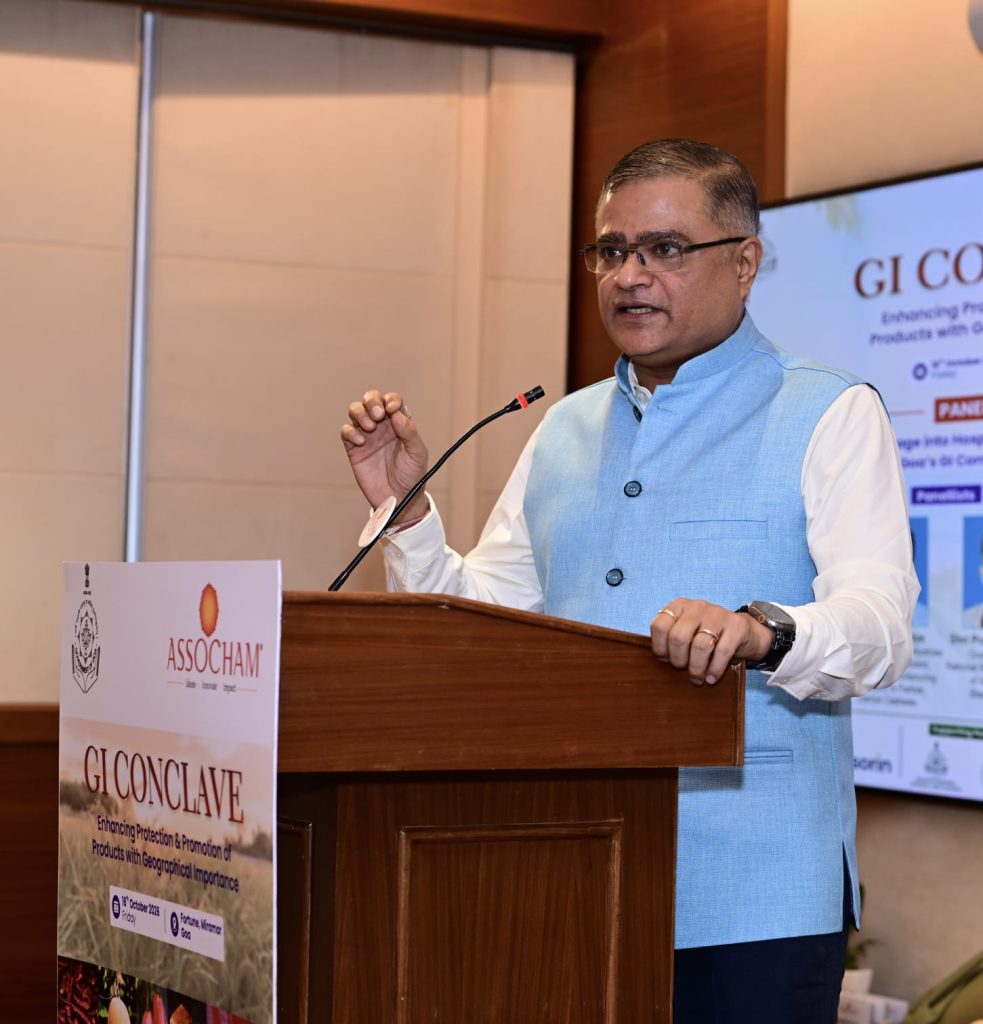
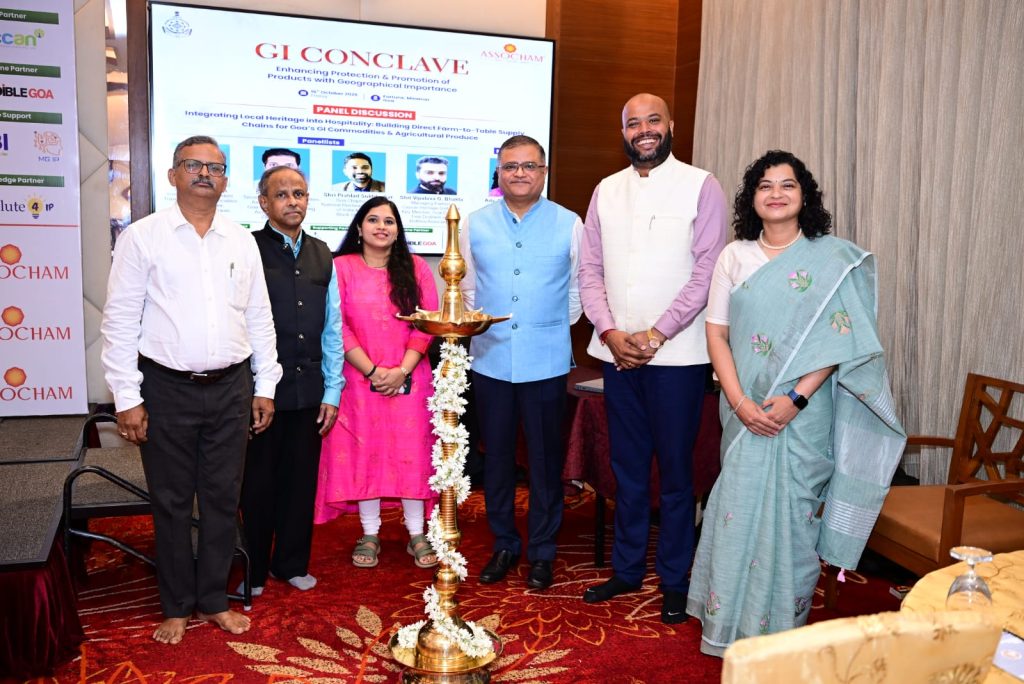
A major highlight of the event was the release of a Coffee Table Book documenting Goa’s Geographical Indications. The publication was brought out by ASSOCHAM in collaboration with its knowledge partner, Resolute4IP, and was unveiled by chief guest Subhash Shirodkar, Minister for Water Resources, Cooperation and Provedoria.
### Subhash Shirodkar Calls for Agricultural Entrepreneurship
Addressing the gathering, Minister Subhash Shirodkar urged young people and farmers in Goa to take agricultural entrepreneurship seriously and explore new opportunities for developing profitable agricultural businesses.
He encouraged farmers and entrepreneurs to study successful agricultural business models implemented in neighbouring states and adapt suitable practices to Goa.


Shirodkar highlighted the importance of cultivating high-value agricultural crops, including brown rice, while preserving traditional organic products that are gradually disappearing.
He specifically referred to traditional products such as bhindachi sola and atmachi sola, stressing the need to protect Goa’s agricultural heritage and create commercial opportunities around such products.
The minister also encouraged farmers and entrepreneurs to make effective use of government water infrastructure schemes and available subsidies to increase agricultural production and support the commercialisation of GI products.
### Agri-Logistics Facility at Mopa Airport by December 2026
Guest of Honour Nikhil Desai, IAS, Secretary for Agriculture, Handicrafts, Textiles and Coir, highlighted the importance of strengthening Goa’s agricultural processing industry and creating better market access for locally manufactured products.
Desai announced that a pack house and agri-logistics facility would be established at Mopa Airport in December 2026 to facilitate exports of agricultural produce from Goa.
The proposed facility is expected to improve the handling, packaging and transportation of agricultural products, helping local farmers and food-processing businesses access wider markets.
Desai also emphasised the commercial potential of locally available resources such as coir and bamboo.
He called for increased production and processing of agricultural products with strong market demand, including mango-based products and jackfruit leather.
### Over 3,000 Food-Processing Units Operating in Goa
Highlighting the contribution of small businesses to Goa’s economy, Desai said the state has more than 3,000 local food-processing units, many of which are operated by women.
He stressed the need to provide these businesses with greater access to supermarkets, organised retail chains and export markets.
According to Desai, stronger marketing networks and better distribution facilities would help local producers expand their businesses and increase the visibility of Goan products.
He also called for the establishment of incubation centres and additional food-processing facilities to support entrepreneurs working with GI products and agricultural produce.
Such facilities, he said, would help strengthen Goa’s agricultural and food-processing ecosystem.
### Hospitality Industry Discusses Direct Farm-to-Table Supply Chains
An important session at the conclave focused on connecting Goa’s agricultural producers directly with hotels, restaurants and other hospitality establishments.
The panel discussion, titled “Integrating Local Heritage into Hospitality: Building Direct Farm-to-Table Supply Chains for Goa’s GI Commodities & Agricultural Produce,” brought together representatives from the Travel and Tourism Association of Goa (TTAG), GCMA, the National Restaurant Association of India (NRAI) and GCFDBA.
The discussion explored ways to increase the use of locally grown agricultural produce and traditional Goan products in the hospitality industry.
Participants discussed opportunities for developing direct supply chains between farmers, producers, hotels and restaurants, with the aim of strengthening local agricultural businesses.
### TTAG and NRAI Extend Support to ‘GOA FRESH’ Initiative
In a significant development, the Travel and Tourism Association of Goa and the NRAI Goa Chapter formally handed over Letters of Intent (LOIs) to the Directorate of Agriculture, Government of Goa.
The initiative is intended to support “GOA FRESH,” which was launched on October 2 under the Swayampurna Goa – Vocal for Local Programme.
The programme aims to encourage the use and promotion of locally produced agricultural products while creating stronger links between farmers and institutional buyers.
The ceremonial handover demonstrated the hospitality industry’s commitment to supporting local agricultural producers and promoting Goan products.
### Focus on GI Protection, Marketing and Export Opportunities
The conclave also featured technical sessions conducted by experts in intellectual property rights, agriculture and related industries.
These sessions addressed important aspects of Geographical Indications, including product protection, market development and opportunities for commercial expansion.
Discussions also highlighted the need to preserve Goa’s traditional agricultural knowledge and strengthen the economic value of products associated with the state’s geographical and cultural identity.
The release of the Coffee Table Book was another step towards documenting and promoting Goa’s GI heritage.
Through the conclave, ASSOCHAM Goa sought to encourage greater collaboration among government departments, farmers, entrepreneurs, industry associations and hospitality businesses.
The event highlighted the potential of Goa’s traditional products to generate new business opportunities, strengthen rural livelihoods and expand the state’s presence in domestic and international markets.