इंग्लिश खबर
Touching art, feeling inclusion : Purple Kaleidoscope Redefines accessibility at International Purple Fest 2025

Goa Khabar : At the International PurpleFest in Goa, art steps off the wall and into the hands of its audience. Purple Kaleidoscope, a tactile and sensory art space, invites visitors to see, touch, and experience creativity through the lens of inclusion.
At International Purple Fest 2025 in Goa, art takes on a new dimension, one that can be felt, not just seen. Purple Kaleidoscope, curated by heritage accessibility consultant Siddhant Shah in collaboration with Purple Fest, transforms the traditional viewing art gallery experience into something deeply human. It celebrates artists with disabilities from Goa and across India while breaking the unspoken barriers that often separate people from art.
“We want to break the mental barrier that art is just for a few,” says Siddhant Shah. “Our focus is on how art can be made available and accessible to all.”
The initiative, he explains isn’t confined to display walls. This year, it unfolds across two interactive spaces: a tactile art gallery and at the Access for All Mela, where sensitisation activities encourage visitors to experience the world through another’s perspective.
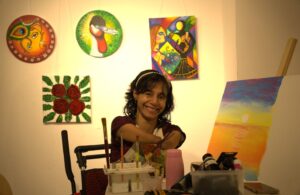

Inside the tactile gallery, the rules of engagement are refreshingly rewritten. The usual ‘Do Not Touch’ placard has been replaced with an invitation: ‘Please Touch.’ Paintings and sculptures are designed to be explored by hand, allowing visitors, especially those with visual impairments to feel texture, depth, and form. What emerges is not only art that can be touched but art that touches back.
“By allowing people to feel the art,” Shah explains, “we are also asking them to feel what it means to belong.” Having been a curator in this space for the third time Shah mentions that he has seen each edition of the Fest become more interesting. “With different formats, art becomes accessible to all. It also pushes the boundaries with each. There is a world of possibilities if we put our head to it,” he says
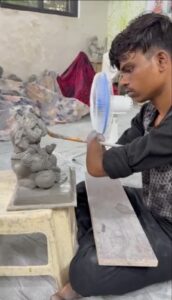

The second space, the Access for All Mela, extends the same spirit of empathy into participatory workshops. Among them is Sculpt in the Dark, where sighted participants are blindfolded and asked to sculpt from clay. The exercise, simple yet powerful, opens a window into the challenges faced by those who navigate the world without sight.
For the third year in a row, the Access for All team has partnered with International Purple Fest, deepening the festival’s commitment to accessibility and awareness.
As students from Fr. Angel Central School, Pilar, shaped clay forms in darkness, the room filled with a hum of quiet concentration. For many, it was their first encounter with the realities of living with visual impairment.
“I felt how difficult life must be for visually impaired people,” mentions Shivam a student participant. “We should respect and help Persons with Disabilities (PwD’s) and not discriminate or tease them.”
Teachers, too, found meaning in the experience. “Although we are different, we all experience pain,” reflected Vidhi Kuttikar. “What we can learn is that People with disabilities have self-belief, what many of us often lack. We should paint our own sky, regardless of the shortcomings we face.”
Around them, and for those who partake in the activities, the atmosphere is one of discovery and empathy. Art for PwD’s was no longer distant or exclusive—it became a bridge between difference and understanding.
At the ongoing International Purple Fest 2025, Purple Kaleidoscope invites every visitor, regardless of ability, to experience art not through sight alone, but through emotion, connection, and imagination.